A painful swelling near the cleft of the buttocks can initially seem like a minor skin problem. When swelling, tenderness, or discharge repeatedly returns in the same area, however, a pilonidal sinus may be one possible explanation.
Patients in Thane, Maharashtra who experience recurring symptoms should consider medical assessment rather than repeatedly treating each episode as an isolated skin infection.
What Is a Pilonidal Sinus?
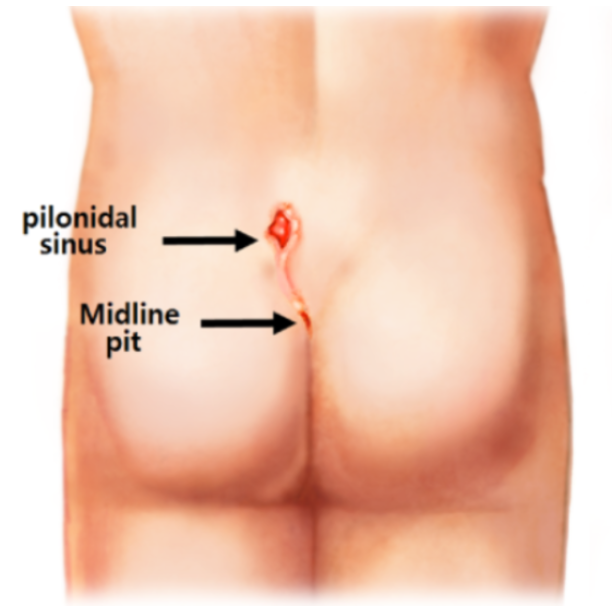
A pilonidal sinus is a small tract or cavity that develops in the skin, usually around the upper part of the buttock cleft.
Hair, friction, local irritation, and other factors can contribute to the condition. The area may remain relatively quiet for a period before becoming inflamed or infected.
Some people notice a small opening without significant discomfort. Others experience repeated painful episodes.
What Symptoms Can Occur?
Symptoms vary depending on whether the area is actively inflamed.
Possible signs include
- Pain near the buttock cleft
- Local swelling
- Redness
- Tenderness
- Fluid or pus-like discharge
- Repeated staining of clothing
- Difficulty sitting comfortably
- Recurring episodes in the same location
Fever or significant worsening can indicate infection requiring prompt assessment.
Why Do Symptoms Sometimes Return?
One frustrating feature of this condition is recurrence.
A painful episode may settle after drainage or temporary treatment, but the underlying sinus can remain. This helps explain why some patients experience repeated cycles of swelling followed by discharge and temporary relief.
If the problem keeps returning, evaluation should focus on the underlying tract rather than only the latest episode.
When Should You See a Surgeon?
Surgical assessment is particularly relevant when episodes recur, drainage continues, discomfort affects sitting or work, or the area repeatedly becomes infected.
The surgeon can examine the location, extent, number of openings, previous treatment history, and current degree of inflammation.
Treatment planning is then based on the actual clinical findings.
Is Surgery Always Required Immediately?
Not every presentation follows the same pathway.
An actively infected or acutely painful condition may require management appropriate to that stage. Definitive treatment planning can depend on the condition of the surrounding tissue and the characteristics of the sinus.
This is why copying another patient's treatment plan is not advisable.
What Should Patients Ask Before Treatment?
Before undergoing a procedure, ask
- What is the extent of the sinus?
- Is active infection present?
- What treatment is recommended?
- What wound care will be needed?
- How long could sitting be uncomfortable?
- When can work resume?
- Are activity restrictions required?
- How will follow-up be arranged?
These practical questions are particularly relevant for patients with jobs that require prolonged sitting, driving, or physical work.
Recovery Planning Matters
Treatment does not end when the procedure is completed.
Depending on the technique used, postoperative care may include wound hygiene, dressing instructions, activity modification, pain management, and follow-up.
Patients should understand how to keep the area clean and what changes may require medical review.
Ignoring postoperative instructions can make recovery more difficult.
Avoid Repeated Self-Treatment
Because the affected area is close to the skin surface, people may repeatedly use topical products or try to manage drainage themselves.
This can delay proper assessment when symptoms are recurrent.
A painful swelling should not be squeezed or manipulated aggressively. If there is significant pain, fever, spreading redness, or worsening swelling, appropriate medical care should be sought.
Pilonidal Sinus Care in Thane
Patients experiencing symptoms of a pilonidal sinus in Thane can seek surgical evaluation at Dr. Suradkar Laparoscopy Centre to determine the extent of the condition and appropriate management.
For patients throughout Thane and surrounding Maharashtra areas, readiness for treatment means understanding the diagnosis, whether active infection is present, what procedure may be required, and how postoperative wound care will be managed.
Recurring symptoms are useful information. Rather than repeatedly treating each flare-up separately, a surgical assessment can help determine whether an underlying sinus is responsible and what longer-term management is clinically appropriate.
Keywords