An anal fistula is a persistent tunnel between the anal canal or rectum and nearby skin, often left behind after an abscess drains. By the end, you will know which symptoms need prompt care, how doctors map the tract, and why treatment depends on its relationship to the anal sphincter.
Key takeaways
- An anal fistula often develops after an infected anal gland forms an abscess.
- Fever, worsening pain, swelling or spreading redness needs prompt medical assessment.
- MRI pelvis and examination under anaesthesia can map complex fistula tracts.
- Choose treatment that clears the tract while protecting the anal sphincter.
What an Anal Fistula Is and Why It Develops
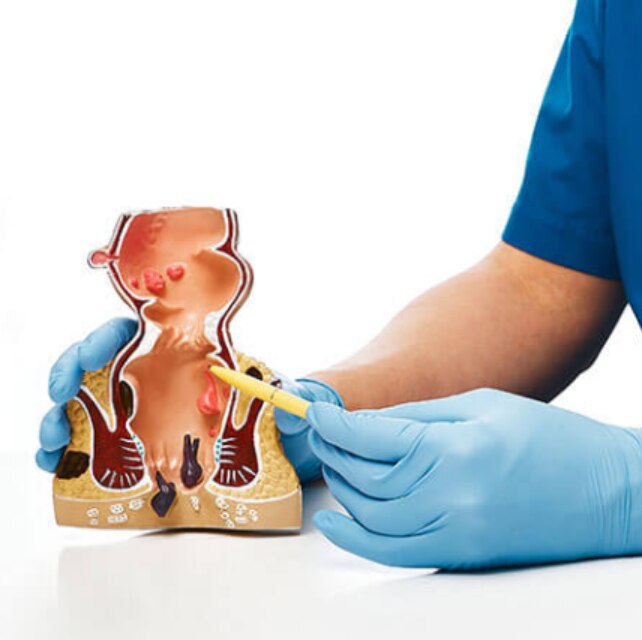
An anal fistula is an abnormal tunnel linking the anal canal or rectum to nearby skin. The internal opening lies inside the anal canal or rectum; the external opening appears on the skin near the anus. The tract connecting them can carry mucus, pus or blood.
Most anal fistula causes are cryptoglandular. A blocked anal gland becomes infected, creating an anal abscess. After the abscess drains on its own or is surgically opened, the remaining pathway can develop an epithelial lining and persist as a fistula.
Abscess versus fistula is the difference between a pocket and a pathway:
| Condition | What it is | What happens |
|---|---|---|
| Anal abscess | A pocket of infection and pus | Causes pressure, pain and swelling |
| Anal fistula | A continuing tract between an internal and external opening | Allows recurrent drainage and infection |
Drainage controls the immediate abscess, but it does not always remove the internal opening or the tract. If the external opening closes first, pus can become trapped, producing another abscess. That is why repeated swelling or discharge after apparent improvement needs assessment.
Less common causes include Crohn’s disease, tuberculosis, hidradenitis suppurativa, previous anorectal surgery, radiation injury, trauma and malignancy. Treating these underlying conditions changes the plan; fistula surgery alone may not solve the problem.
Symptoms, Urgent Warning Signs and Conditions That Look Similar
Anal fistula symptoms include recurrent swelling in the same place, pain, pus or blood, foul-smelling anal discharge, irritated skin and a small opening near the anus. Pain can lessen after the tract drains, but apparent improvement does not prove healing; the opening may close while infection collects underneath.
Seek prompt medical assessment for these perianal abscess warning signs:
- Severe pain with fever, rapidly increasing swelling or redness spreading into nearby skin.
- Weakness, feeling acutely unwell, or inability to pass stool or urine.
- Any suspected infection if you have diabetes or significant immune suppression, because infection can worsen quickly.
A draining opening is not automatically a fistula. Anal fissure versus fistula, haemorrhoids and other look-alikes can be separated by their usual features:
| Condition | Typical clue |
|---|---|
| Anal fissure | A visible tear with sharp pain during bowel movements |
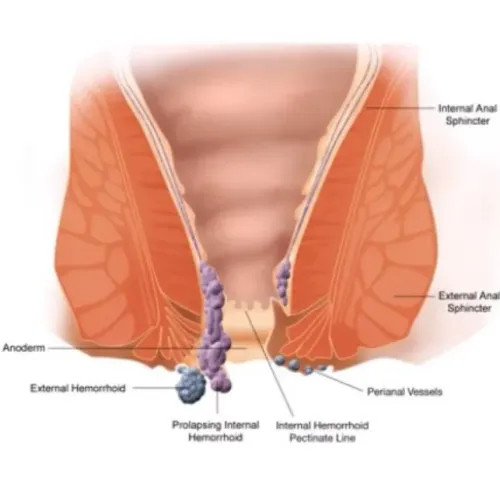
| Haemorrhoids | Swollen vascular cushions that can bleed or protrude |
| Pilonidal sinus | An opening in the buttock cleft above the anus |
| Hidradenitis suppurativa | Recurrent nodules and tunnels in skin folds |
| Perianal Crohn’s disease | Multiple or complex openings, often with other bowel symptoms |
Appearance alone cannot confirm a fistula. Persistent drainage, renewed swelling or a new opening needs examination rather than squeezing the area or repeatedly treating it yourself.
How Doctors Diagnose the Tract and Judge Its Complexity
Anal fistula diagnosis starts with your history. Tell the doctor about previous abscesses, operations, drainage, bowel symptoms, recurrent openings and Crohn’s disease. These details can reveal hidden branches or an underlying condition that changes treatment.
The examination includes inspection for the external opening, digital rectal examination and anoscopy to find the internal opening or pus. A clinician may gently probe an accessible tract, but forceful probing can create a false passage. If pain, scarring or a tiny opening prevents reliable mapping, examination under anaesthesia allows safer assessment.
Simple versus complex fistula depends mainly on anatomy, not the skin opening’s size.
| Feature | Simple or low tract | Complex or high tract |
|---|---|---|
| Meaning | Shorter path involving little sphincter muscle | High path, substantial sphincter involvement, branches or recurrent disease |
| Main concern | Fistulotomy may be suitable | Sphincter-sparing treatment may be needed |
| Patterns | Often intersphincteric or low transsphincteric | Suprasphincteric, extrasphincteric, horseshoe or secondary extensions |
Doctors determine whether the tract crosses the internal or external sphincter. Parks-type descriptions— intersphincteric, transsphincteric, suprasphincteric and extrasphincteric—describe that route.
MRI pelvis for fistula or endoanal ultrasound helps with recurrent or complex disease, Crohn’s disease, suspected secondary tracts or an occult abscess; straightforward fistulas do not always need imaging. Your continence history also matters because cutting sphincter muscle can cause gas or stool leakage.
How Fistula Treatment Is Chosen Without Unnecessary Sphincter Damage
A painful, fluctuant abscess needs prompt incision and drainage: antibiotics alone cannot empty a walled-off collection. Add antibiotics for cellulitis, systemic infection, significant immunosuppression or relevant medical comorbidity.
The treatment depends on how much sphincter muscle the tract crosses and whether infection is active.
| Option | What it does | When it fits |
|---|---|---|
| Fistulotomy | Opens the tunnel along its length to heal from the base | Simple, low fistulas with adequate sphincter function |
| Loose seton placement | Keeps the tract open and drains ongoing infection | Sepsis control or staged treatment when immediate cutting is unsafe |
| Advancement flap | Covers the internal opening without dividing substantial sphincter | Selected high or complex fistulas |
| LIFT procedure for fistula | Ties off the tract in the intersphincteric plane | Selected tracts with substantial sphincter involvement |
| Fibrin glue or bioprosthetic plug | Seals or fills the tract without cutting muscle | Selected cases, with less consistent healing |
Fistulotomy is unsafe for many high or complex tracts because dividing too much sphincter can cause gas or stool leakage. A loose draining seton controls sepsis but is not automatically a definitive cure; another procedure may follow.
With Crohn’s disease, treatment combines drainage, a loose seton when needed and medical control such as anti-TNF biologic therapy. Fistulotomy is reserved for carefully selected superficial disease. Dr. Suradkar Laparoscopy Centre 08048032179 can help discuss diagnosis, imaging and procedure choices without assuming one technique suits every anatomy.
Related service
Fistula Treatment Dr. Shekhar Suradkar offers advanced and minimally invasive fistula treatment at Highway Hospital. View service → |
What Recovery and Follow-Up Should Tell You
Fistula recovery is judged by more than a closed skin opening. Fistula follow-up checks that infection is controlled, the wound is healing from the correct path, bowel function is manageable and continence remains intact.
- Attend the planned review even when pain and drainage have improved. A closed external opening does not prove cure; premature closure can trap infection and cause fistula recurrence.
- Seek reassessment for persistent anal discharge after treatment, renewed or worsening pain, fever, swelling, a new opening, or difficulty passing stool. These signs can indicate a continuing tract or an abscess, which can coexist with a fistula.
- Do not squeeze the area, insert objects or repeat self-treatment. A small skin opening can conceal a complex tract or a collection that needs examination under anaesthesia, imaging or drainage.
Tell the clinician if you have diabetes, symptoms suggesting Crohn’s disease, previous anorectal operations or any change in gas control, stool control or leakage. These details affect the safety of further treatment and help protect sphincter function.
The deciding factors are the tract’s anatomy, infection status, underlying cause and sphincter function—not the size of the visible opening alone.
Frequently asked questions
What causes an anal fistula?
Most anal fistulas develop after an anal gland infection causes an abscess that drains through the skin. Crohn’s disease, tuberculosis, previous anorectal surgery and injury can also cause them.
When should you seek urgent care for anal fistula symptoms?
Seek prompt medical care for fever, rapidly worsening anal pain, increasing swelling, spreading redness, difficulty passing urine or feeling generally unwell. These signs can indicate an abscess or spreading infection.
How do doctors diagnose an anal fistula?
A doctor examines the anal opening and surrounding skin, looks for drainage and may gently assess the tract. MRI of the pelvis, endoanal ultrasound or examination under anaesthesia can map deeper or branching fistulas.
How is anal fistula treatment chosen?
Treatment depends on the tract’s position, its relationship to the anal sphincter, branching, recurrence and conditions such as Crohn’s disease. Fistulotomy suits selected simple fistulas, while setons, advancement flaps or other sphincter-sparing procedures protect continence in complex cases.
What should recovery and follow-up involve?
Follow wound-care instructions, keep the area clean, manage bowel movements as advised and attend scheduled reviews. Report increasing pain, fever, heavy bleeding, persistent drainage or new difficulty controlling stool or gas.