A cyst that remains on repeat scans is not automatically cancerous, and it does not automatically require removal. The right choice depends on the cyst’s type, size, ultrasound features, symptoms, age, menopause status, fertility plans and cancer-risk assessment; you will be able to use those factors to understand when monitoring, cystectomy or a different operation makes sense.
Key takeaways
- A cyst is persistent when it remains, grows, returns, or fails to resolve as expected.
- Repeat ultrasound is often appropriate for simple cysts without concerning symptoms or features.
- Cancer risk assessment uses ultrasound findings, symptoms, age, and selected blood tests.
- Cystectomy removes the cyst while preserving ovarian tissue; oophorectomy removes the ovary.
What makes an ovarian cyst persistent, and which types matter?
Persistence means a cyst fails to resolve during the expected observation period, grows, returns after treatment, or remains visible on repeat ultrasound. A functional ovarian cyst often follows the menstrual cycle and may disappear after menstruation; other cysts behave differently.
| Type | Typical significance |
|---|---|
| Functional cyst | Often cycle-related; observation may show resolution |
| Endometrioma | Linked with endometriosis, painful periods and pain during sex; recurrence and ovarian-reserve concerns affect treatment |
| Dermoid cyst | Usually benign and slow-growing; its size, torsion risk and appearance guide management |
| Cystadenoma | Benign growth that can enlarge and cause pressure; surgery may be considered |
| Complex cyst | Contains solid areas, septations or other features needing closer assessment |
An unchanged cyst is not automatically malignant. Enlargement, recurring symptoms or new solid components change the decision about monitoring, MRI or surgery. Pelvic pressure, urinary pressure, painful periods, pain during sex or abnormal bleeding can make a persistent cyst clinically important even when its scan appearance is reassuring.
Seek urgent assessment for sudden severe one-sided pain with nausea, vomiting, faintness, fever or marked tenderness. These symptoms can indicate ovarian torsion, rupture or haemorrhage; torsion threatens the ovary’s blood supply and requires urgent treatment, not routine follow-up.
When is repeat ultrasound safer than surgery?
For a premenopausal patient, repeat ultrasound is safer than surgery when the cyst is simple, thin-walled and unilocular, with no worrying symptoms. A simple ovarian cyst 5 cm or smaller commonly needs no follow-up; a cyst measuring 5–7 cm is commonly monitored with ultrasound rather than removed immediately.
Use menstrual cycle timing when arranging a repeat ultrasound ovarian cyst assessment. Scanning after menstruation can show whether a suspected functional cyst has resolved, preventing a normal cycle-related structure from being mistaken for a persistent mass.
Persistent cysts above 7 cm, or a complex ovarian cyst ultrasound finding, may lead to MRI or surgery after reviewing morphology, growth and symptoms. Findings that move management away from observation include:
- Solid areas or papillary projections
- Thick septations or an irregular multilocular structure
- Increased blood flow within solid or papillary areas on Doppler
- Ascites
- Bilateral cysts
The threshold for specialist review also changes with age, menopause status, pregnancy plans, family history of breast or ovarian cancer and symptom severity. A postmenopausal persistent or complex mass receives more cautious assessment than a similar finding in a menstruating patient.
Persistent does not automatically mean cancer, but a growing mass, worsening pain or a new suspicious feature should not be managed by routine surveillance alone.
How doctors assess cancer risk before choosing an operation
A pelvic examination, transvaginal ultrasound and blood testing when appropriate form the ovarian cancer risk assessment. Examination checks tenderness, fixation and fullness; ultrasound assesses the cyst’s walls, contents and blood flow. CA-125 helps an ovarian cyst assessment, but it is not a stand-alone cancer test.
Before menopause, endometriosis, fibroids, pelvic infection, menstruation and pregnancy can raise it, while a normal result cannot rule out cancer.
| Finding | Why it matters |
|---|---|
| Solid or papillary areas | Raises suspicion beyond a simple cyst |
| Ascites or bilateral masses | Supports specialist cancer assessment |
| Complex, enlarging mass | Makes routine observation less suitable |
| High calculated risk index | Warrants specialist planning |
After menopause, CA-125 contributes more usefully to a calculated risk index alongside ultrasound, but it remains non-diagnostic. Order other tumour markers only for selected patients, based on age and the suspected tumour type.
Refer to a gynaecologic oncologist when imaging shows suspicious solid or papillary areas, ascites, bilateral disease, a complex or enlarging mass, a high calculated risk, or concerning symptoms.
A routine laparoscopic cystectomy is the wrong plan if cancer is suspected, the cyst is too large for safe removal, extensive adhesions block access, or unstable bleeding demands rapid control. The surgeon may need open surgery or a cancer-staging operation instead, because rupture or incomplete staging can complicate later treatment.
Cystectomy, oophorectomy and fertility: what exactly is removed?
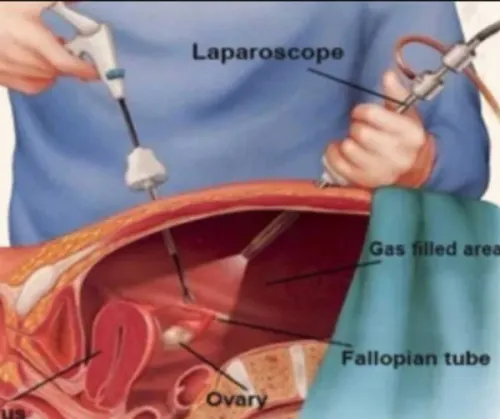
Cystectomy removes the cyst while preserving as much ovary as possible; a laparoscopic cystectomy is chosen when the cyst looks suitable for separation and useful ovarian tissue can remain. Oophorectomy removes part or all of the ovary.
The decision considers the cyst’s appearance, possible malignancy, your age and fertility goals, and the condition of the opposite ovary.
| Option | What is removed | Main trade-off |
|---|---|---|
| Cystectomy | Cyst, with ovarian tissue preserved | Preserves more ovary, but surgery can reduce ovarian reserve |
| Oophorectomy | Part or all of one ovary | May be safer for extensive disease or cancer concern, but leaves less ovarian tissue |
Cyst removal can reduce ovarian reserve, measured with anti-Müllerian hormone and antral follicle count. The concern is greater after bilateral surgery, repeat operations or endometrioma treatment. If you hope to conceive, discuss fertility preservation or reproductive counselling before planned surgery, because that conversation is harder after ovarian tissue has been removed.
Aspiration or drainage is not equivalent to cystectomy: the lining remains, so recurrence is common, and drainage is not a definitive treatment for suspected cancer. Dermoid surgery requires planning to prevent spillage; surgeons use retrieval bags and perform copious lavage if sebaceous material escapes.
Every removed cyst goes to histopathology, which establishes whether it is benign, borderline or malignant.
What to expect from laparoscopic treatment and recovery
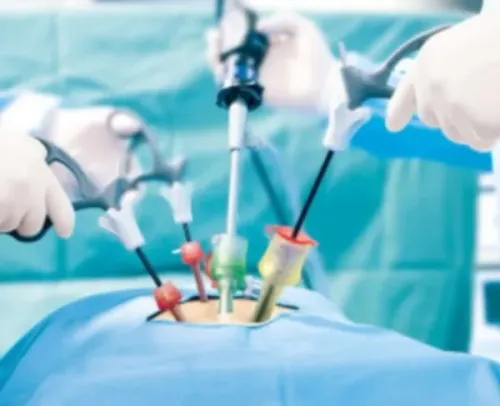
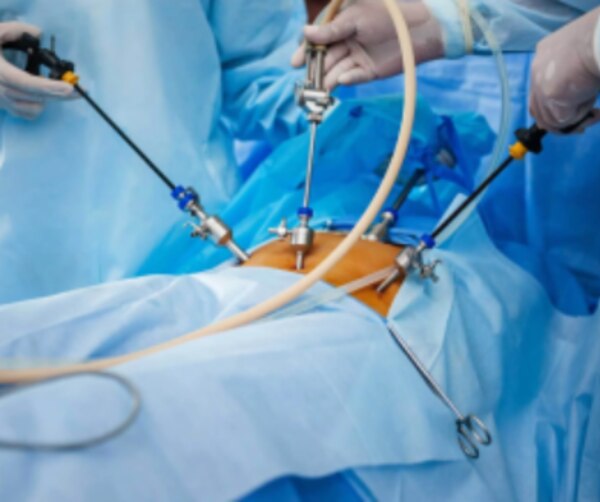
Laparoscopy is an option when surgery is necessary and scans suggest a benign ovarian mass; it is not the right solution for every persistent cyst. Compared with open surgery, it uses smaller incisions, usually causes less postoperative pain, shortens the hospital stay and supports faster recovery.
| Approach | Practical course | When it changes |
|---|---|---|
| Laparoscopy | Same-day discharge or one-night observation after uncomplicated surgery; incision soreness and abdominal-gas pain are common | Suitable when the cyst is safely accessible and appears benign |
| Laparotomy | Larger abdominal incision, more pain, longer hospital stay and slower recovery | Needed for a very large cyst, uncontrolled bleeding, severe adhesions or unexpected cancer concerns |
The surgeon may convert laparoscopy to laparotomy if safe removal or bleeding control becomes impossible. If cancer is suspected during surgery, the plan may need to change to staging by a gynaecologic-oncology team rather than routine cyst removal.
Laparoscopic ovarian cyst removal recovery commonly takes about two to three weeks before normal activity or work, depending on the operation and your occupation. The removed tissue must undergo histopathology to identify a benign, borderline or malignant lesion.
Seek urgent care for these postoperative warning signs:
- Worsening pain, faintness or fever
- Heavy vaginal bleeding or repeated vomiting
- Increasing abdominal swelling or breathlessness
Before consenting, patients in Thane can ask Dr. Suradkar Laparoscopy Centre 08048032179 whether the plan is cystectomy or oophorectomy, how ovarian reserve and fertility plans affect it, what would require open surgery and how the specimen will be examined.
Related service
Laparoscopic Ovarian Cyst Removal Laparoscopic Ovarian Cyst Removal Laparoscopic ovarian cyst removal is a minimally invasive surgical procedure performed to safely remove ovarian cysts while preserving healthy... View service → |
Frequently asked questions
What makes an ovarian cyst persistent?
A cyst is persistent when it fails to resolve during the expected observation period, grows, returns after treatment, or remains visible on repeat ultrasound. Functional cysts often follow the menstrual cycle, while other cyst types behave differently.
When is repeat ultrasound safer than surgery?
Repeat ultrasound is appropriate when the cyst has reassuring features, symptoms are manageable, and there is no urgent concern such as torsion, rupture, or suspected cancer. Your doctor sets the follow-up interval based on the cyst’s appearance and your clinical history.
How do doctors assess ovarian cancer risk before surgery?
Doctors review your age, symptoms, medical history, ultrasound findings, and changes in cyst size. They may also order blood tests such as CA-125 when the overall assessment indicates a need for further evaluation.
What is the difference between cystectomy and oophorectomy?
A cystectomy removes the cyst while preserving the ovary. An oophorectomy removes part or all of an ovary and is considered when preserving ovarian tissue is unsafe or impossible.
How can laparoscopic cyst removal affect fertility?
Laparoscopic cystectomy aims to preserve healthy ovarian tissue, but the effect on fertility depends on the cyst type, its size, the amount of ovarian tissue involved, and whether one or both ovaries require treatment.