Appendicitis can begin as vague pain near the navel and become a surgical emergency when infection spreads or the appendix perforates. You will learn which symptoms need urgent assessment, how doctors confirm the diagnosis, why treatment differs between uncomplicated and complicated cases, and what recovery after surgery involves.
Key takeaways
- Seek emergency care for worsening pain, especially in the right lower abdomen.
- Doctors use an examination, blood tests, urine tests, and imaging to assess appendicitis.
- Laparoscopic appendectomy uses small incisions and usually supports a faster recovery.
- Report fever, worsening pain, vomiting, redness, or drainage after discharge.
Which Appendicitis Symptoms Need Emergency Assessment?
Seek emergency assessment now for severe or rapidly worsening abdominal pain, rather than waiting for a routine appointment. Appendicitis symptoms often begin as pain around the navel, then move to the right lower abdomen. Pain that worsens when you walk, cough, or move is concerning.
Fever, nausea, vomiting, loss of appetite, diarrhoea, or constipation can also occur; fever and vomiting in appendicitis deserve prompt medical review.
| Pattern | Symptoms or warning signs | What to do |
|---|---|---|
| Typical pattern | Pain moves from around the navel to the right lower abdomen, with nausea, appetite loss, or fever | Arrange urgent assessment |
| Atypical pattern | Children, older adults, pregnant patients, and people with an unusually positioned appendix may have vague, differently located, or milder pain | Do not dismiss symptoms because they do not follow the usual pattern |
| Emergency signs | A rigid or swollen abdomen, repeated vomiting, faintness, confusion, high fever, or pain that briefly improves before returning more severely | Seek emergency care immediately |
Symptoms vary, and symptom severity alone cannot confirm or exclude appendicitis. A perforated appendix can release infected material into the abdominal cavity, causing peritonitis or a localized abscess; delay increases the risk of serious infection.
Do not take laxatives to force a bowel movement, and do not repeatedly take painkillers to postpone evaluation. Both actions can delay assessment or obscure a worsening condition.
How Do Doctors Confirm Appendicitis and Classify Its Severity?
Doctors begin appendicitis diagnosis with an abdominal examination. They check for tenderness, guarding, rigidity, distension, and pain that worsens when you move, cough, or are examined. A complete blood count looks for white-cell changes, while C-reactive protein measures inflammation. Urine testing helps identify a urinary infection or blood suggesting a kidney stone.
Ultrasound is useful for children, thin patients, and pregnancy-related assessment because it avoids radiation. A CT scan is used when the diagnosis remains uncertain or when doctors need to map perforation, an abscess, or other complications. The choice between appendicitis ultrasound or CT scan depends on your age, pregnancy status, symptoms, and local practice.
Uncomplicated appendicitis has inflammation without gangrene, perforation, diffuse peritonitis, an abscess, or an appendix mass. The operative finding can change that classification, even when a scan appeared less severe.
Treatment follows the findings:
- Immediate laparoscopic appendectomy removes the appendix through small incisions.
- Open appendectomy may be safer when inflammation or anatomy prevents safe laparoscopy.
- Antibiotics alone suit selected adults with imaging-confirmed uncomplicated disease, but an appendicolith raises the chance of treatment failure and later surgery.
- An abscess may need drainage followed by antibiotics.
- An interval appendectomy removes the appendix after inflammation settles when immediate surgery is unsafe or unsuitable.
The surgeon’s examination during treatment determines whether antibiotics, drainage, observation, or definitive surgery needs adjustment.
What Happens Before and During a Laparoscopic Appendectomy?
Before surgery, follow the fasting instructions exactly; eating or drinking too close to anaesthesia increases the risk of aspiration. The team reviews your medicines, records allergies, starts intravenous fluids, gives antibiotics before the incision, and orders a pregnancy test when relevant.
Tell the surgical team about:
- Blood thinners, diabetes medicines, and steroid use
- Previous abdominal operations or pregnancy possibility
- Any medicine, latex, food, or anaesthetic allergy
Arrange for an adult to take you home if same-day discharge is appropriate. Do not drive yourself.
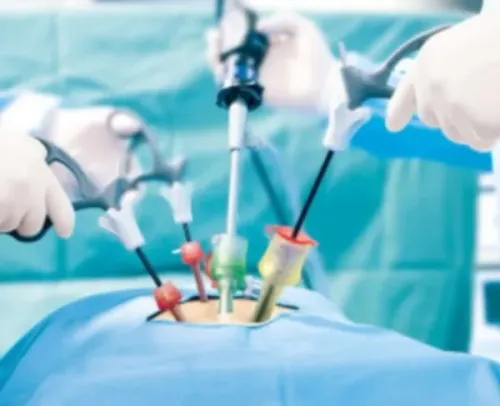
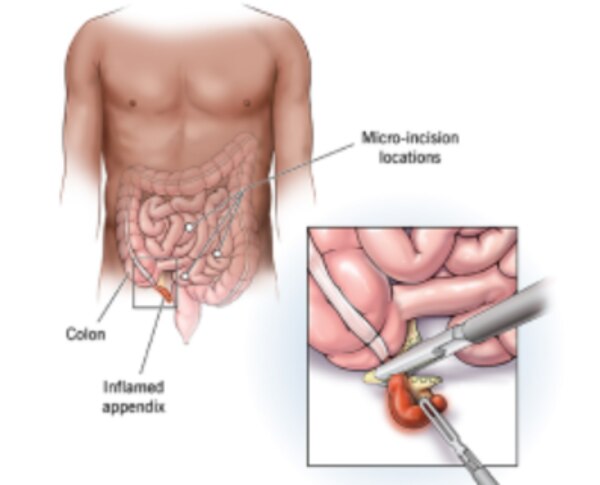
A general anaesthesia appendectomy leaves you fully asleep. During the laparoscopic appendectomy procedure, the surgeon inflates the abdomen with carbon dioxide, inserts a camera through an umbilical incision, and places instruments through two additional small incisions. The appendix is separated and divided at its base, placed in an appendix specimen bag, and removed.
The surgeon checks for bleeding or contamination before closing the wounds. The appendix then goes for histopathological examination.
| Option | Main advantage | When it applies |
|---|---|---|
| Laparoscopic | Usually fewer wound infections and a shorter stay | Safe visibility and access are possible |
| Open | Direct access can be safer | Severe inflammation, bleeding, adhesions, unexpected anatomy, or limited visibility |
| Conversion | Protects the patient | The surgeon cannot safely continue keyhole surgery |
Conversion to an open incision is a safety decision, not a failed operation. A consultation with Dr. Suradkar Laparoscopy Centre 08048032179 can help a patient in Thane discuss the appropriate approach.
Related service
Laparoscopic Appendectomy Laparoscopic Appendectomy is a minimally invasive procedure to safely remove an inflamed or infected appendix. Dr. View service → |
What Should You Expect During Recovery and at Discharge?
Appendectomy recovery is usually limited more by abdominal soreness and fatigue than by the small skin wounds. Pain after laparoscopic appendectomy often improves with prescribed oral medicines; shoulder discomfort from residual abdominal gas can last briefly. Nurses treat nausea, encourage early walking, and monitor your progress.
1. Before discharge, nurses check that you can urinate, walk safely, drink without persistent vomiting, and gradually restart food as tolerated. Your observations must remain stable, and pain must be controlled with oral medicine rather than intravenous treatment.
2. Many patients with uncomplicated appendicitis leave on the day of surgery or after one overnight stay. A same-day discharge appendectomy is safe only when these milestones are met. Perforation, an abscess, significant medical illness, uncontrolled pain, persistent vomiting, or abnormal observations can require longer monitoring and intravenous antibiotics.
3. The treating team sets the stay and antibiotic duration according to source control, examination, blood tests, and clinical progress—not a fixed schedule. Follow wound-care instructions, and do not drive while taking sedating pain medicine or until you can brake comfortably.
Light activity usually resumes within several days. Return to work after appendectomy, or return to school, often occurs within one to two weeks, but heavy lifting, strenuous exercise, and contact sports must wait for the surgeon’s instructions.
Which Complications and Follow-Up Problems Should You Recognize?
Small incisions do not remove appendectomy complications. Bleeding, anaesthetic complications, venous thromboembolism, bowel or bladder injury, wound infection, ileus, port-site hernia, and intra-abdominal abscess remain possible. Risk rises with perforation, previous operations, other illness, pregnancy, and age.
Seek medical assessment for:
- Worsening abdominal pain or increasing abdominal distension
- Fever or chills
- Persistent vomiting or inability to eat or drink
- Shortness of breath or new calf swelling
- Failure to improve after the initial recovery period
A normal-looking wound does not exclude an intra-abdominal abscess after appendectomy. This is particularly important after perforation, when infected fluid can collect deeper in the abdomen without redness or discharge at the skin.
Postoperative antibiotics are not routinely needed after removal for uncomplicated appendicitis. Perforation or another intra-abdominal infection requires a defined course after adequate source control; prolonged treatment is not automatic.
| Condition | Antibiotics after surgery | Follow-up concern |
|---|---|---|
| Uncomplicated appendicitis | Usually none | Review symptoms and wound recovery |
| Perforation or intra-abdominal infection | Defined short course, often 3–5 days after adequate source control | Abscess, ileus, persistent infection |
Appendix histopathology matters even when the appendix looked typical. A neuroendocrine tumour, mucinous lesion, adenocarcinoma, parasite, or other inflammatory disease can require further imaging, colon evaluation, or additional surgery.
Stump appendicitis is inflammation in residual appendix tissue. Recurrent right-lower-quadrant pain still needs evaluation after appendectomy; previous removal does not make that symptom harmless.
Frequently asked questions
Which appendicitis symptoms need emergency assessment?
Seek emergency assessment for severe or rapidly worsening abdominal pain, pain moving from the navel to the right lower abdomen, or pain worsened by walking, coughing, or movement.
How do doctors confirm appendicitis and classify its severity?
Doctors assess your symptoms and abdomen, then use blood tests, urine testing, and imaging such as ultrasound or CT when needed. They classify findings such as uncomplicated inflammation, perforation, abscess, or widespread infection.
What happens before and during a laparoscopic appendectomy?
Before surgery, the team reviews your medicines, allergies, test results, anaesthesia plan, and consent. During the operation, surgeons use a camera and instruments through small abdominal incisions to separate and remove the appendix.
What should you expect during recovery and at discharge?
Expect monitoring after anaesthesia, gradual fluids and food, pain-control instructions, wound-care guidance, activity restrictions, and a planned follow-up. Your discharge timing depends on the operation and your recovery.
Which complications and follow-up problems should you recognize?
Contact your surgical team urgently for fever, worsening abdominal pain, repeated vomiting, increasing wound redness or swelling, pus, bleeding, breathing difficulty, or inability to pass urine or food.