A visible leg vein does not show which vessel is leaking or prove that laparoscopic surgery is appropriate. By the end, you will know how venous reflux is diagnosed, what “laparoscopic ligation” can mean, how established treatments compare, and which warning signs require prompt care.
Key takeaways
- Duplex ultrasound confirms reflux and maps which veins need treatment.
- Seek urgent care for sudden leg swelling, chest pain or breathlessness.
- Ask whether “laparoscopic ligation” means endoscopic perforator surgery or another procedure.
- Confirm benefits, risks, recovery time and alternatives before consenting to surgery.
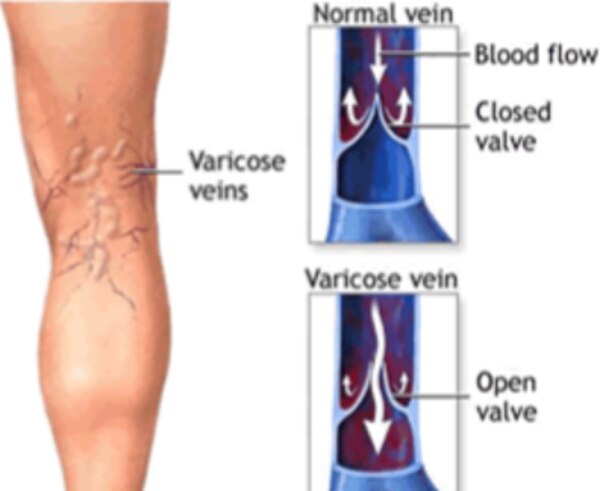
How faulty vein valves create varicose veins
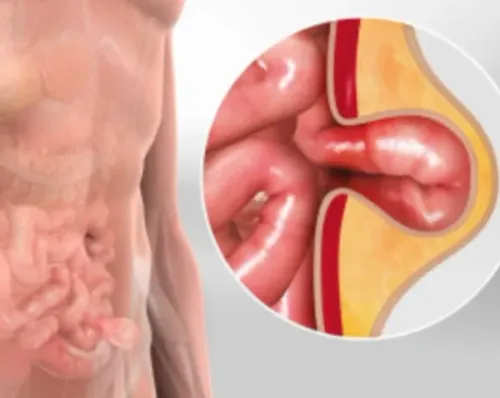
Varicose veins are enlarged, twisted superficial veins caused by faulty valves. When valves fail to close, gravity drives blood backward, creating venous reflux and pressure that stretches the vein. Spider veins are smaller red, blue or purple networks near the skin, unlike bulging varicose veins; they are mainly cosmetic. Duplex ultrasound maps reflux beyond appearance.
Symptoms that suggest clinically important venous disease include:
- Aching legs or leg heaviness after standing, walking or sitting for long periods.
- Leg swelling that increases during the day or leaves tight marks from socks.
- Itching around a visible vein, especially when the skin feels dry or irritated.
- Skin discoloration, including brown, red or purple patches near the ankle.
- Venous eczema, with inflamed, scaly or weeping skin.
- Hardened skin or a tight, thickened area around the lower calf.
- Leg ulcers, particularly wounds near the ankle that heal slowly or recur.
| Feature | Varicose veins | Spider veins |
|---|---|---|
| Appearance | Raised, widened, twisted blue or green veins | Fine, flat red, blue or purple lines |
| Underlying problem | Faulty valves can cause venous reflux and sustained vein pressure | Small surface vessels; reflux can exist underneath even when only spider veins are visible |
| Clinical assessment | Duplex ultrasound maps superficial and deep veins, reflux and blood-flow direction | Assess symptoms and scan for reflux before treating as cosmetic disease |
When symptoms need a vein assessment or urgent care
A visible bulging vein does not identify the vein causing your symptoms. The clinician starts with a medical history covering aching, heaviness, swelling, itching, previous clots, pregnancy, injuries and earlier vein treatment, then performs a standing examination so gravity reveals swelling, skin changes or prominent veins.
Duplex ultrasound confirms whether the problem lies in the superficial veins, deep veins or both. It records blood-flow direction and uses reflux mapping to show backward flow, its duration and the vein segments involved. Those findings guide treatment; surface appearance alone does not.
| Finding | What it may indicate | What to do |
|---|---|---|
| Gradual aching, heaviness, itching or ankle swelling around visible veins | Venous reflux or another routine vein problem | Arrange a vein assessment and duplex ultrasound |
| Sudden one-sided leg swelling with warmth or severe leg pain | Deep-vein thrombosis, especially if the leg becomes tender or tight | Seek urgent medical care immediately; do not massage the leg |
| Chest pain or breathlessness, particularly after leg swelling or pain | Pulmonary embolism, caused by a clot travelling to the lungs | Call emergency services now |
A deep-vein thrombosis can occur without dramatic surface veins, so do not wait for a visible change before seeking help. Chest pain or breathlessness is an emergency rather than a symptom to monitor at home.
What “laparoscopic varicose vein ligation” means in practice
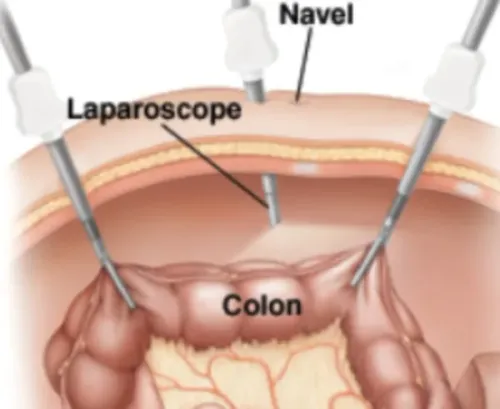
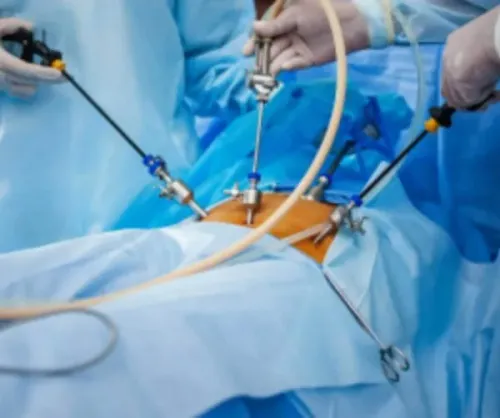
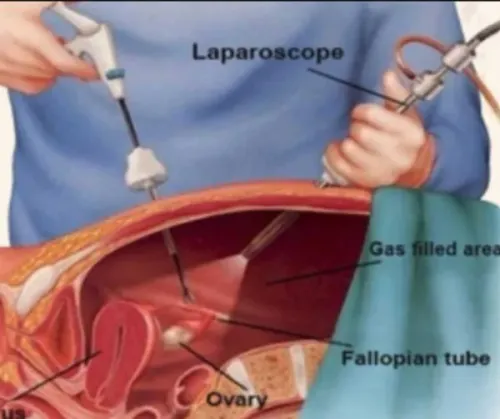
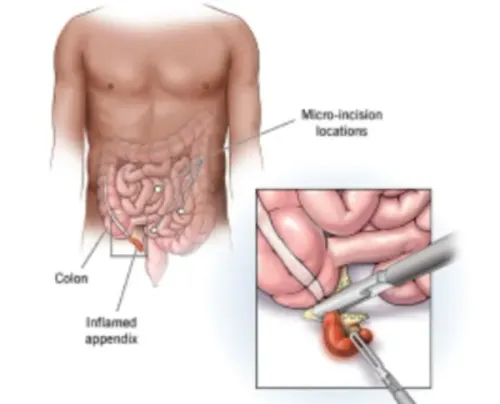
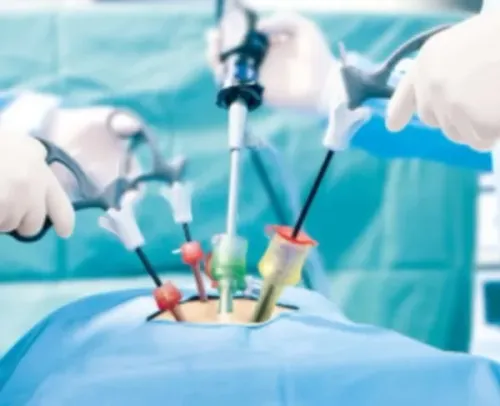
The phrase laparoscopic varicose-vein ligation can describe two different operations. For leg varicose veins, ordinary treatment usually uses access through the leg, not abdominal access. A duplex scan identifies reflux before anyone chooses a vein for closure; a visible vein alone does not identify the source.
| Option | Vein and access route | Anesthesia and closure |
|---|---|---|
| Leg varicose veins | The refluxing saphenous vein is treated through leg or groin incision sites, often with catheter access; traditional surgery uses high ligation and stripping. | Tumescent local anesthesia suits catheter ablation; general anesthesia may be used for stripping. Ligation, stripping, or endovenous ablation closes the faulty vein. |
| SEPS | Subfascial endoscopic perforator surgery, or SEPS, reaches incompetent perforator veins through small leg incision sites beneath the fascia. | Usually general anesthesia; the surgeon divides or clips perforators, then closes the small skin openings. |
| Varicocele | Laparoscopic surgery enters the abdomen through several port sites to reach the internal spermatic veins. | General anesthesia; laparoscopic ligation seals those veins, and the port incision sites receive sutures, adhesive, or dressings. |
SEPS is reserved for selected advanced venous disease, not uncomplicated superficial leg varicose veins. A varicocele operation is called a varicocelectomy. Microsurgical inguinal or subinguinal varicocelectomy avoids abdominal access and helps preserve the testicular artery and lymphatics, so laparoscopic access is not automatically the least invasive choice.
Which leg-vein treatment fits confirmed reflux
Confirmed reflux does not automatically mean an operation. Duplex findings, persistent symptoms and complications determine whether treatment is medically reasonable; visible veins alone may justify cosmetic treatment, not vein removal.
| Option | Main role | When it fits |
|---|---|---|
| Conservative care | Compression stockings, exercise and leg elevation reduce aching, swelling and pooling but do not remove reflux. | Mild symptoms, pregnancy, or while preparing for intervention. |
| Endovenous treatment | Endovenous laser ablation, radiofrequency ablation, mechanochemical ablation and cyanoacrylate closure seal a refluxing truncal vein through a catheter. | NICE recommends endothermal treatment first for suitable confirmed truncal reflux. |
| Injection treatment | Ultrasound-guided foam sclerotherapy closes the target vein with injected foam. | Use when endothermal treatment is unsuitable, or for selected veins. |
| Ambulatory phlebectomy | Small skin openings remove bulging surface branches. | Treats troublesome tributaries, often alongside truncal treatment. |
| Traditional surgery | High ligation and vein stripping remove the refluxing saphenous vein. | Consider it when catheter treatment and foam sclerotherapy are unsuitable; recovery usually involves more bruising. |
NICE supports referral for symptomatic primary varicose veins and for skin changes, venous ulcers, superficial thrombophlebitis, bleeding varicosities or recurrent disease after treatment. These findings make intervention more than an appearance-based choice.
A laparoscopic operation is not the routine first-line treatment for uncomplicated leg reflux, and repeat treatment requires duplex evidence rather than surface appearance alone.
What to confirm before consenting to vein surgery
Do not consent until the proposed target is proven. Leg surgery is unsuitable or needs correction first with untreated deep-vein obstruction, active infection, unsuitable duplex anatomy, significant peripheral arterial disease, lymphedema, or nerve disease. Ask whether duplex ultrasound maps reflux and deep-vein flow, rather than treating a visible surface vein.
| Operation | Confirm before consent | Risks and follow-up to discuss |
|---|---|---|
| Leg-vein procedure | Which vein causes symptoms, and why this method rather than catheter treatment or phlebectomy? | Bleeding, infection, nerve injury, residual veins, recanalization, and recurrent reflux; ask how recurrence will be confirmed and treated |
| Microsurgical inguinal varicocelectomy or subinguinal varicocelectomy | Is there infertility, abnormal semen analysis, pain attributable to the varicocele, or impaired testicular growth? | Preservation of the testicular artery and lymphatics, plus risks of hydrocele, infection, bleeding, persistence, and recurrence |
| Laparoscopic varicocelectomy | Why enter the abdomen instead of a microsurgical approach, and what approach-specific risks apply? | Ask how the surgeon identifies the testicular artery and lymphatics and what follow-up detects testicular injury |
For infertility, ask how your partner’s reproductive assessment affects the decision; repair is not a guaranteed fertility treatment. Ask for the surgeon’s results by named technique and follow-up duration, not a generic success rate.
Dr. Suradkar Laparoscopy Centre 08048032179 can discuss whether a proposed laparoscopic operation fits the diagnosis, but an independent vascular or microsurgical urology opinion is reasonable when the anatomy or goal remains unclear.
Frequently asked questions
How do faulty vein valves create varicose veins?
When valves fail to close, blood flows backward under gravity. This venous reflux raises pressure and stretches superficial veins, producing enlarged, twisted varicose veins.
When do varicose vein symptoms need assessment or urgent care?
Arrange a vein assessment for pain, swelling, skin changes, ulcers, bleeding or recurrent inflammation. Seek urgent care for sudden one-sided swelling or pain, chest pain or breathlessness.
What does laparoscopic varicose vein ligation mean in practice?
The term needs clarification because common leg-vein procedures are usually endovenous ablation, ligation and stripping, or treatment of incompetent perforator veins. Ask the surgeon to name the exact operation and vein being treated.
Which treatment fits confirmed venous reflux?
Duplex ultrasound findings guide treatment. Options include compression and observation, endovenous thermal ablation, cyanoacrylate or sclerotherapy, phlebectomy, ligation and stripping, or perforator treatment.
What should you confirm before consenting to vein surgery?
Confirm the ultrasound findings, exact procedure, expected benefit, alternatives, anaesthesia, complications, recovery restrictions, follow-up plan and what happens if symptoms persist.