Pain or drainage in the cleft above the buttocks can reflect anything from an asymptomatic skin pit to an abscess that needs prompt drainage. You will learn which factors contribute to pilonidal disease, how to recognise urgent symptoms, what an examination involves, and when surgery is worth discussing.
Key takeaways
- Friction and pressure can drive loose hair into skin and form a sinus.
- Pits, painful swelling, pus, and persistent drainage need medical assessment.
- Home care can ease symptoms but cannot remove an established sinus tract.
- Ask about procedure choice, wound care, time off work, and recurrence risk.
How loose hair and pressure create pilonidal disease
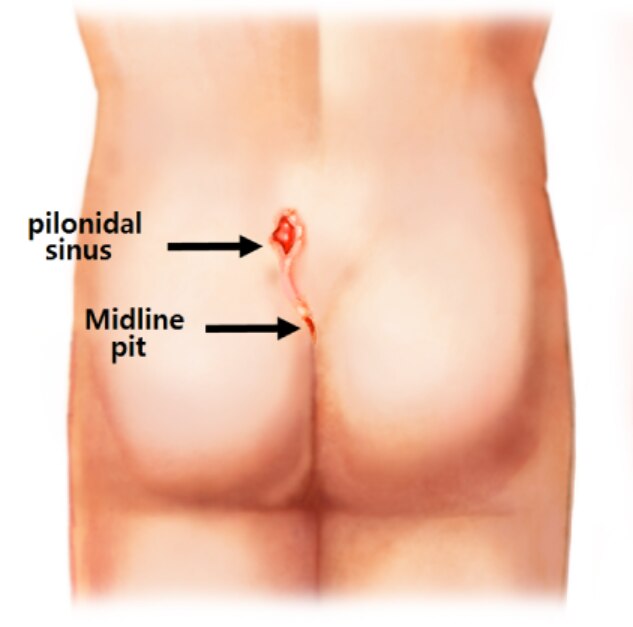
Loose hair in natal cleft is the central trigger in most pilonidal sinus causes. Hair can be pushed into the skin by friction and pressure, where it acts as a foreign body. The resulting inflammation forms a pit and, over time, a sinus tract.
This is an acquired condition, not usually a congenital cyst or simply an infected hair follicle.
| Factor | Role | How it raises risk |
|---|---|---|
| Loose hair | Direct trigger | Enters the cleft and provokes a foreign-body reaction |
| Friction or trauma | Contributing force | Drives hair into irritated skin |
| Prolonged sitting | Contributing pressure | Keeps pressure on the cleft and limits ventilation |
| Deep natal cleft | Anatomical risk factor | Traps hair, sweat and debris close to the skin |
| Obesity | Risk factor | Increases cleft depth, moisture and pressure |
| Sweating | Risk factor | Leaves skin damp and more prone to irritation |
| Male sex and young age | Population risk factors | Disease is more common in males during adolescence and young adulthood |
| Family history | Susceptibility factor | Indicates a tendency toward cleft shape or hair penetration |
These factors increase the chance of disease without causing it alone. Poor hygiene is not the explanation: regular cleaning cannot always prevent hair penetration, while keeping the cleft clean and dry can reduce irritation. Hair management, weight control and less sitting may lower recurrence risk, but they do not reliably remove established sinus tracts.
Warning signs: pits, abscesses and chronic drainage
Pilonidal sinus warning signs range from a harmless-looking opening to a painful infection. An early pit is not the same as an abscess, and chronic drainage signals a different problem.
- Early pit: One or more small midline pits appear in the upper natal cleft. They may cause no pain, redness or discharge, so a visible pit alone does not mean you need surgery.
- Acute abscess: A tender lump within or beside the cleft becomes swollen, red, warm and increasingly painful. Sitting or walking can hurt, and the lump may release pus or blood drainage. Incision and drainage is the key treatment; antibiotics alone cannot empty a collection.
- Chronic draining disease: The opening repeatedly leaks pus or blood, stains underwear, or produces a foul odour. Swelling may settle and return, leaving intermittent soreness rather than the constant severe pain of a fresh abscess.
- Urgent infection: Seek urgent medical assessment for redness spreading away from the cleft, rapidly worsening pain or swelling, fever, chills, weakness, or difficulty sitting and walking. These signs suggest cellulitis or a systemic infection around the abscess.
After drainage, persistent or recurrent openings indicate ongoing sinus disease. Arrange surgical review when drainage keeps returning, abscesses recur, or symptoms disrupt daily life—not simply because a pit is visible.
What examination and home care can—and cannot—do
A clinician usually makes a pilonidal sinus diagnosis by inspecting and gently examining the natal cleft. They look for midline pits, openings, tenderness, swelling, redness, drainage and an abscess, then ask about previous episodes.
Routine imaging is not needed; ultrasound, MRI or another scan is reserved for an unusual presentation or concern about a different condition.
While arranging care:
- Keep the cleft clean and dry. Wash gently, rinse away soap and pat the area dry; do not scrub or squeeze a pit.
- Reduce pressure and friction by taking breaks from sitting and wearing loose, breathable clothing.
- Use a warm compress for comfort if there is a painful lump, but stop if pain or swelling worsens.
- Do not shave inflamed skin. Hair removal can irritate the cleft, and the safest method for you should be discussed with a clinician.
- Do not start antibiotics from an old prescription. Antibiotics do not remove an established sinus tract, although a clinician may prescribe them when infection spreads or drainage is accompanied by systemic illness.
Home care can calm irritation but cannot reliably close persistent openings. Seek same-day assessment for spreading redness, rapidly increasing pain, fever, chills, or difficulty sitting or walking. A large abscess often needs drainage rather than tablets alone.
When surgery becomes a reasonable treatment decision
An asymptomatic pit does not justify an operation. When pilonidal sinus surgery is needed, the usual reasons are persistent drainage, repeated abscesses, or symptoms that interfere with sitting, walking, work or sleep. A single visible pit without pain or discharge is usually observed rather than removed.
A painful, swollen abscess needs acute abscess drainage: opening the collection and releasing pus. Antibiotics alone cannot empty it; add them when spreading cellulitis, fever, systemic illness or relevant medical conditions are present. Drainage treats the immediate infection, not always the sinus tracts, so persistent or recurrent disease may later need definitive treatment.
| Option | What it involves | Best fit and trade-off |
|---|---|---|
| Pit-picking | Removes the midline pits and cleans nearby sinus cavities through small openings | Limited disease; smaller wounds and quicker early recovery, but less suitable for branching or recurrent tracts |
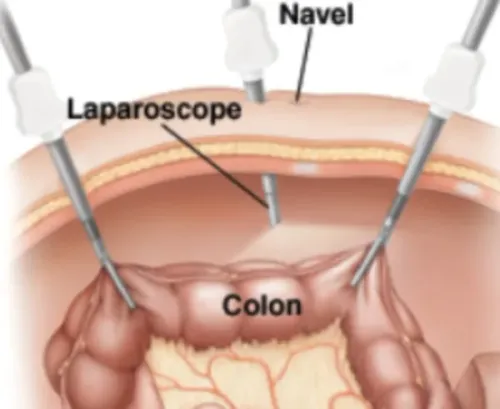
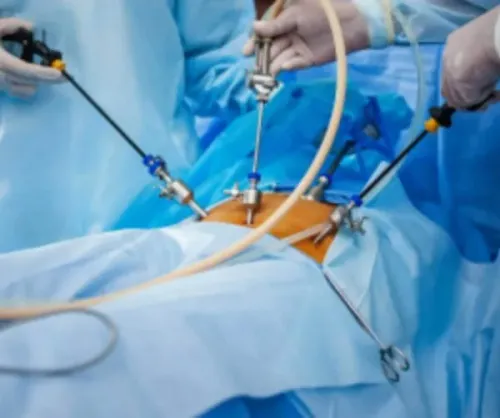
| EPSiT | A small endoscope identifies and clears the sinus from inside | Selected limited disease; minimal tissue disruption, while long-term evidence is less mature than for established flap operations |
| Flap procedure | Removes diseased tissue and shifts healthy skin to flatten or move the cleft | Extensive, deep or recurrent disease; more wound care, but better coverage when simple methods are unlikely to work |
At Dr. Suradkar Laparoscopy Centre 08048032179, ask whether your disease is limited or branching, whether an abscess needs drainage first, and what recurrence and wound-care expectations apply to the proposed method. unerquicklich
Related service
Pilonidal Sinus Treatment Dr. Shekhar Suradkar at Highway Hospital offers advanced and minimally invasive treatment for Pilonidal Sinus, a painful condition near the tailbone... View service → |
Questions to ask about recovery and recurrence
Before consenting, clarify the closure, recovery timetable, wound care, and recurrence risk rather than relying on the operation’s name.
- Ask whether the surgeon plans an off-midline closure. A Karydakis flap, Bascom cleft-lift, or Limberg flap places the scar away from the deepest cleft; direct midline closure is generally avoided when a flap is needed.
- Ask whether your disease is suitable for EPSiT or pit-picking. These techniques create smaller wounds for selected, limited disease, but extensive, branching, recurrent, or very deep disease may need a flap.
- Ask how long you should expect to stay off work, avoid driving, restrict exercise, and sit normally. Open healing avoids a suture line in the cleft but often demands prolonged dressing care; primary closure usually heals faster.
- Ask who will change dressings, when you can shower, and which findings require review: increasing pain, spreading redness, fever, pus, wound separation, or persistent drainage.
- Ask for the surgeon’s recurrence estimate and the specific reason it could happen, including new hair penetration, a deep cleft, infection, wound breakdown, or residual openings.
After healing, keep the cleft clean and dry, reduce friction and long sitting, and manage weight if advised. Discuss hair management before acting; shaving can irritate skin, and the best removal method is not established. Seek review early if swelling, drainage, or recurrent pain returns.
Frequently asked questions
How do loose hair and pressure cause pilonidal disease?
Friction and pressure can push loose hair into the natal-cleft skin. The hair acts as a foreign body, triggering inflammation, a pit, and eventually a sinus tract.
What warning signs suggest a pilonidal sinus?
Common warning signs include small pits in the cleft, painful swelling, an abscess, pus, blood, or chronic drainage from an opening.
What can home care do for pilonidal sinus?
Keeping the cleft clean and dry, reducing friction, and avoiding pressure can help symptoms. Home care cannot remove an established sinus tract or treat a significant abscess.
When might surgery be needed for pilonidal sinus?
Surgery becomes a reasonable option when infection recurs, drainage persists, a sinus tract remains, or symptoms interfere with daily life after assessment.
What should you ask about pilonidal sinus surgery recovery?
Ask which procedure is recommended, how the wound will be managed, when you can return to work and activity, and how recurrence risk will be reduced.