Bleeding, itching, a painful lump and tissue that comes out during a bowel movement do not all point to the same type of piles or the same treatment. By matching your symptoms with the location, prolapse pattern and severity of the haemorrhoid, you can understand which options range from bowel-habit changes to office procedures or surgery—and when rectal bleeding needs a different investigation.
Key takeaways
- Bright-red bleeding with straining often points to internal haemorrhoids.
- Increase fibre, fluids and toilet-time habits before considering procedures.
- Banding treats selected internal haemorrhoids; laser or surgery suits other findings.
- Black stools, severe pain or weight loss need medical assessment, not self-treatment.
Which type of piles matches your symptoms?
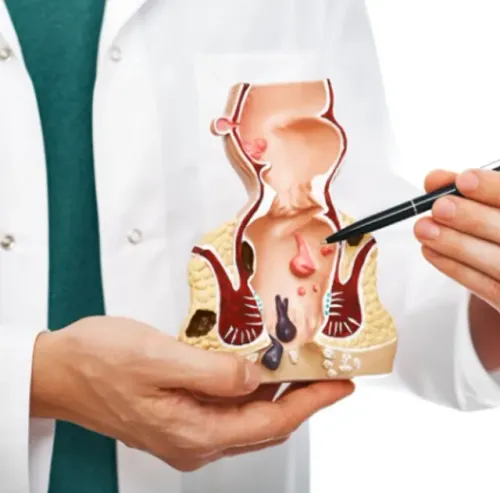
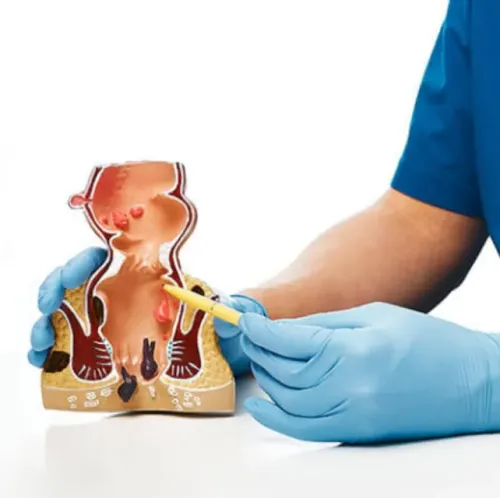
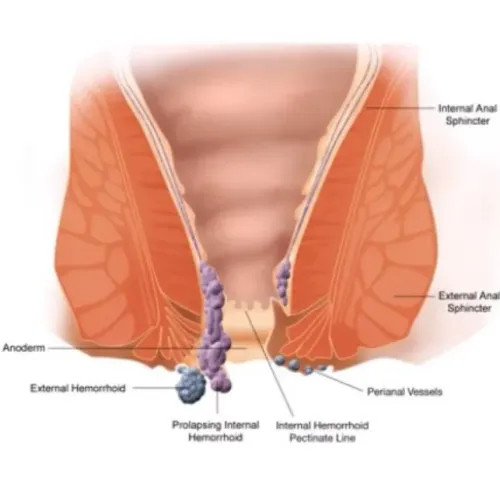
The location and behaviour of the lump matter more than bleeding alone. Internal haemorrhoids commonly cause bright-red bleeding, itching, mucus, incomplete emptying or tissue that appears during straining.
Grade I bleeds without prolapsing; grade II comes out with straining and returns by itself; grade III needs manual replacement; grade IV remains outside and cannot be comfortably reduced.
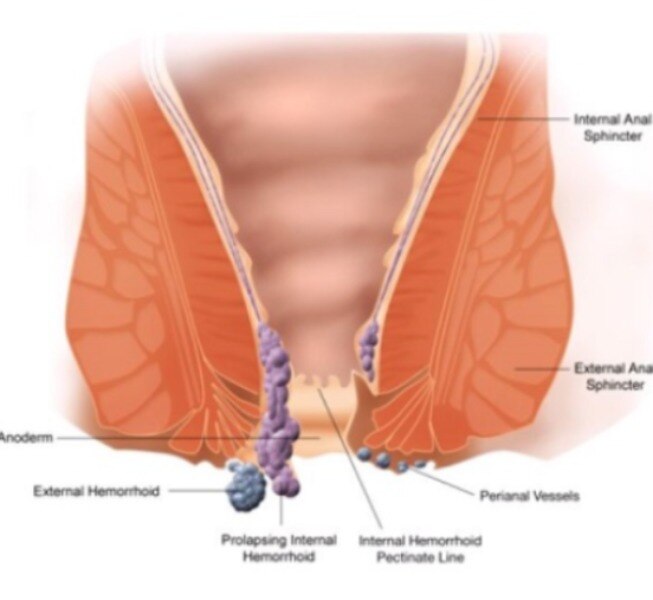
External haemorrhoids form at the anal opening, causing a visible lump, irritation or pain. A suddenly painful blue or purple lump suggests a thrombosed external haemorrhoid. Mixed haemorrhoids combine internal prolapse with an external component, so they may need a different procedure from bleeding-only internal piles.
| Type or symptom | Typical clue | Likely treatment pathway |
|---|---|---|
| Internal, grade I | Bleeding without prolapse | Fibre, fluids, stool regulation; sclerotherapy or infrared coagulation if symptoms persist |
| Internal, grades II–III | Prolapse during straining, with spontaneous or manual reduction | Rubber-band ligation or another procedure after examination |
| Internal, grade IV | Tissue stays outside | Specialist assessment; surgery may be needed |
| External | Lump, irritation or pain at the opening | Local care and stool regulation; procedure depends on size and symptoms |
| Thrombosed external | Sudden, severe pain with blue-purple lump | Prompt assessment for early excision; later cases may use pain relief and observation |
| Mixed | Internal prolapse plus external tissue | Anorectal examination before selecting treatment |
Bleeding without prolapse, itching or mild swelling usually starts with gradual fibre, adequate fluids and bowel regulation. A lump that needs pushing back, stays outside, or causes repeated mucus and soiling needs examination before choosing piles treatment for different symptoms.
What should you try first for bleeding, itching or difficult stools?
For mild bleeding, itching or difficult stools without significant prolapse, start by regulating stool and toilet habits before considering a procedure. Increase fibre gradually toward 20–35 g daily from vegetables, fruit, pulses, whole grains or a fibre supplement; adding it slowly helps limit gas and bloating.
- Drink adequate fluids so added fibre does not worsen hard stools.
- Avoid straining and respond promptly to the urge to pass stool.
- Keep toilet visits brief; prolonged sitting increases pressure on haemorrhoidal tissue.
- Treat constipation or diarrhoea, because either problem can keep symptoms recurring.
- Ask a clinician or pharmacist whether a stool-softening medicine is appropriate when diet alone is insufficient.
Fibre is an active treatment, not merely general wellness advice: evidence shows it reduces persistent symptoms by about 53% and bleeding by about 50%. It will not immediately correct a large prolapse. Short-term topical medicines can ease itching or irritation, but they cannot remove prolapsed tissue.
If bleeding remains the main symptom and the haemorrhoids are small and internal, injection sclerotherapy or infrared coagulation may be suitable office-based options. They target internal haemorrhoids, not a large external lump, advanced prolapse or mixed disease, and repeat treatment may be needed.
These distinctions matter when comparing piles treatment for different symptoms or piles treatment options in Thane: the best first step depends on anatomy, not the treatment label.
When do banding, laser or surgery fit the problem?
Bleeding or prolapsing internal piles often fit an office procedure, while bulky prolapse or mixed disease may need surgery. The right choice depends on the prolapse grade, whether an external lump is present and whether bleeding, pain or difficulty with cleaning is the main problem.
| Option | Best fit | Main trade-off |
|---|---|---|
| Rubber-band ligation | Bleeding or prolapsing internal haemorrhoids, especially grades I and II and selected grade III cases | The band sits above the pain-sensitive area; pressure, discomfort or temporary bleeding can occur, and several sessions may be needed |
| Laser treatment or Doppler-guided haemorrhoidal artery ligation, sometimes with mucopexy | Selected internal haemorrhoids with bleeding or prolapse | Less tissue removal, but recurrence and further treatment remain possible |
| Stapled haemorrhoidopexy | Prolapsing internal tissue without a prominent external lump | Less early pain in suitable cases, but greater long-term recurrence risk than excisional surgery |
| Excisional haemorrhoidectomy | Large grade III or IV haemorrhoids, combined internal-and-external disease or failed office treatment | More definitive for bulky disease, but causes more postoperative pain and requires longer wound healing |
These piles treatment choices for different symptoms in Thane are not interchangeable. A procedure that lifts internal tissue will not remove an external lump, and laser treatment is not automatically better because it sounds less invasive.
A severe, newly painful bluish external lump may suit early excision, often within about 72 hours. Later or milder thrombosed lumps commonly receive pain relief, local care, stool-softening measures and observation. Discuss recurrence, recovery and repeat-treatment risk when comparing piles treatment options in Thane.
Which symptoms mean it may not be piles?
Sharp, tearing pain during a bowel movement with a small amount of bright-red blood points more toward an anal fissure than uncomplicated piles. Treatment differs, so pain as the main symptom warrants examination rather than self-treatment.
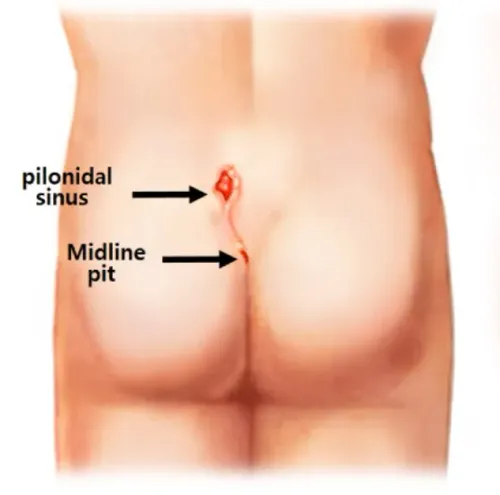
Pus, recurrent swelling or a small opening that repeatedly drains suggests an anal fistula. A painful lump near the tailbone suggests a pilonidal sinus, not an anal haemorrhoid.
| Condition | Clues that point away from piles | Why diagnosis matters |
|---|---|---|
| Anal fissure | Tearing pain during bowel movements; small bright-red bleeding | Treatment targets the fissure |
| Anal fistula | Pus, recurrent swelling or a repeatedly draining opening | An abscess or fistula may need a procedure |
| Pilonidal sinus | Painful lump near the tailbone | The problem lies in the natal cleft |
Seek prompt medical assessment for fever, severe constant pain, rapidly increasing swelling, heavy or nonstop bleeding, dizziness, fainting, black stools, symptoms of anaemia, or inability to pass stool or urine. These signs can indicate infection, significant bleeding, obstruction or another urgent condition.
Do not assume persistent rectal bleeding is piles if you are over 45, have a family history of colorectal cancer, see blood mixed into stool, lose weight, develop abdominal symptoms or notice a lasting change in bowel habit. A clinician confirms the cause through symptom history, external inspection and digital rectal examination.
An anoscopy examines the anal canal; sigmoidoscopy or colonoscopy investigates bleeding or bowel symptoms higher in the colon. These tests distinguish haemorrhoids from fissure, fistula, polyps, inflammatory bowel disease and colorectal cancer. A piles specialist near Thane can assess the correct piles treatment for different symptoms rather than treating every bleed as piles.
How should you choose a piles treatment pathway in Thane?
Choose the pathway that matches the anatomy, prolapse grade and dominant symptom—not the procedure named in an advertisement. Ask whether the haemorrhoids are internal, external or mixed, and whether constipation is driving recurrence.
Before comparing local care, ask:
- Is the main problem bleeding, pain, itching, mucus, a lump or difficulty passing stool?
- What prolapse grade applies: I, II, III or IV?
- Why does the clinician recommend fibre and stool regulation, topical medicines, or a procedure?
- How many sessions are expected, and will you need local, regional or general anaesthesia?
- Is care same-day or overnight? What are the pain-control and wound-care plans?
- How long will you miss work, and when can you lift, exercise and attend follow-up?
- Which symptoms require urgent contact?
| Option | Best fit | Key trade-off |
|---|---|---|
| Fibre, stool regulation, topical medicines | Mild bleeding, itching or constipation | Helps recurrence drivers; does not remove major prolapse |
| Banding, sclerotherapy, infrared coagulation | Small internal piles, mainly bleeding | Office treatment; repeat sessions can be needed |
| Laser treatment or artery ligation | Selected internal bleeding or prolapse | Less tissue removal; recurrence must be discussed |
| Stapled haemorrhoidopexy | Suitable internal prolapse | Less early pain; does not remove an external lump |
| Haemorrhoidectomy | Bulky grade III–IV or mixed disease | More pain and wound-healing time; often more definitive |
Do not choose “laser” because the word sounds advanced. Suitability depends on your examination findings.
For someone seeking a piles specialist near Thane, Dr. Suradkar Laparoscopy Centre 08048032179 can provide a local point for discussing examination, available piles treatment choices for different symptoms in Thane, and follow-up arrangements before scheduling.
Related service
Piles Surgery Dr. Shekhar Suradkar offers advanced and minimally invasive piles surgery at Highway Hospital, ensuring safe, painless, and effective treatment. View service → |
Frequently asked questions
Which type of piles matches my symptoms?
Internal haemorrhoids commonly cause bright-red bleeding, itching, mucus, incomplete emptying or tissue appearing during straining. A lump that remains outside, severe pain or a tender bluish swelling needs examination because it may be prolapse or a thrombosed external haemorrhoid.
What should I try first for bleeding, itching or difficult stools?
Address constipation first with fibre-rich food, adequate fluids, regular movement and less straining. Keep the area clean, avoid prolonged toilet sitting and arrange an examination if bleeding persists or returns.
When do banding, laser or surgery fit the problem?
Rubber-band ligation suits selected internal haemorrhoids that bleed or prolapse. Laser procedures and conventional surgery depend on the size, number, external component and degree of prolapse; a surgeon must confirm the cause before choosing one.
Which symptoms mean it may not be piles?
Seek prompt medical assessment for black or maroon stools, heavy bleeding, dizziness, fever, severe or constant pain, a new persistent change in bowel habit, unexplained weight loss or a non-healing anal lesion.
How should I choose a piles treatment pathway in Thane?
Choose a clinician who examines the anus and rectum, explains the grade and location, discusses non-procedure care and gives clear reasons for banding, laser or surgery. Dr. Suradkar Laparoscopy Centre provides specialist surgical consultation through a hospital in Thane.
Keywords