Right-sided abdominal pain does not always mean appendicitis, and a confirmed diagnosis does not lead to the same treatment for every patient. You will be able to compare surgery, antibiotics, drainage and delayed surgery, understand how pregnancy and medical conditions affect the plan, and know what to ask before consenting to treatment.
Key takeaways
- CT or ultrasound findings help distinguish uncomplicated appendicitis from perforation or abscess.
- Perforation, gangrene and abscess usually require different treatment and longer recovery.
- Pregnancy, age, obesity and medical conditions affect laparoscopic suitability and anaesthesia planning.
- Verify emergency support, surgeon experience, imaging access and postoperative monitoring before choosing a hospital.
How doctors confirm appendicitis before choosing treatment
Tenderness that starts near the navel and moves to the right lower abdomen raises suspicion for appendicitis, but it does not confirm it. The clinician checks guarding, rebound tenderness, fever, pulse, dehydration and pain during movement, then orders a blood count, C-reactive protein, urine test and pregnancy test when relevant.
Raised white cells support inflammation but cannot identify its cause.
CT with intravenous contrast gives adults the clearest view of an enlarged appendix, surrounding fat inflammation, a perforation, abscess or appendicolith. Ultrasound is often preferred first for children and pregnancy; MRI helps when ultrasound is inconclusive during pregnancy.
| Cause | Findings that point toward it | Test that helps separate it |
|---|---|---|
| Appendicitis | Progressive right-lower pain, nausea, focal tenderness | Ultrasound or CT showing an inflamed appendix |
| Kidney stone | Flank-to-groin pain, blood in urine, restlessness | Urine test and CT urinary-tract imaging |
| Gastroenteritis | Vomiting or diarrhoea with diffuse cramps | Examination and imaging when symptoms do not fit |
| Ovarian cyst or ectopic pregnancy | Pelvic pain, bleeding or missed period | Pregnancy test and pelvic ultrasound |
| Gallbladder disease | Right-upper pain after meals, shoulder pain | Liver tests and abdominal ultrasound |
Doctors match the scan with the examination because a normal appendix on imaging changes the plan. These checks guide laparoscopic appendectomy options for patients in Thane, antibiotics-first care, drainage or further investigation rather than removing an unrelated organ.
Which treatment matches uncomplicated appendicitis, perforation or an abscess?
An uncomplicated appendicitis without an appendicolith usually suits laparoscopic appendectomy when surgery is chosen. It removes the infected appendix through small incisions and generally causes less pain, fewer wound infections and quicker recovery than open surgery. These are central comparisons when reviewing appendix surgery options in Thane.
| Option | What it means | When it applies |
|---|---|---|
| Laparoscopic appendectomy | Appendix removal under general anaesthesia | Preferred for most adults needing surgery, including many pregnant patients, children, older adults and people with obesity |
| Antibiotics with observation | Antibiotics, examination and prompt reassessment without immediate surgery | Imaging-confirmed uncomplicated appendicitis without perforation, abscess or appendicolith; treatment failure and recurrence remain possible |
| Drainage plus antibiotics | Image-guided or surgical drainage of infected fluid | A walled-off abscess when immediate appendix removal is unsafe or unlikely to control infection |
| Open appendectomy | Removal through a larger incision, or conversion from laparoscopy | Unsafe anatomy, extensive adhesions, uncontrolled bleeding, diffuse inflammation or unstable vital signs |
| Interval appendectomy | Planned removal after initial non-operative treatment | Selected patients after an abscess or appendicular mass, based on recurrence risk, persistent symptoms and follow-up findings |
Perforation with diffuse peritonitis or sepsis usually requires urgent surgery and intravenous antibiotics. A drain is not routine after complicated laparoscopic surgery; use it only for a specific operative reason.
A calcified appendicolith makes antibiotics-only treatment less suitable because failure and later surgery are more likely. Selected children can discuss antibiotics first, but perforation, abscess or sepsis needs a paediatric surgical plan. Laparoscopic appendix removal in Thane should be converted to open surgery when safe dissection is impossible.
How pregnancy, age, obesity and medical conditions change suitability
Immediate laparoscopic appendectomy suits a patient with confirmed acute appendicitis who is stable for general anaesthesia and needs operative treatment. Uncomplicated disease is usually suitable; perforation or diffuse peritonitis can also be managed laparoscopically when the team can control contamination, bleeding and bowel injury.
Conversion to open surgery is safer when visibility or anatomy is poor.
- Pregnancy: Do not delay necessary surgery or choose open surgery automatically. Use pregnancy-appropriate positioning, anaesthesia and trocar placement; untreated appendicitis can perforate and threaten both patient and fetus.
- Age: Children often need ultrasound first, while older adults need careful assessment of frailty, kidney function, heart and lung reserve, and other causes of abdominal pain.
- Obesity: Laparoscopy may avoid a larger wound, but anaesthesia, positioning, access and postoperative clot or breathing risks need planning.
- Medical conditions: Diabetes, blood-thinner use, major heart or lung disease, immune suppression or unstable vital signs can require medication adjustment, monitoring or a different operation plan.
- Abscess or appendicular mass: A walled-off infection often needs antibiotics with drainage and delayed surgery rather than immediate removal.
For laparoscopic appendectomy suitability in Thane, ask about 24-hour anaesthesia, imaging, blood-bank access and rescue capability. An appendicolith raises failure risk with antibiotics alone. An inconclusive ultrasound does not by itself rule out surgery; doctors combine examination, blood tests and further imaging.
What to verify before choosing a hospital and surgical team
Before choosing among laparoscopic appendectomy options for patients in Thane, verify the hospital’s ability to manage complications, not just its small-incision approach. Ask whether it provides 24-hour emergency surgery and anaesthesia, CT or other cross-sectional imaging, blood-bank access, intensive postoperative monitoring, and pathology examination of the removed appendix.
Ask the surgical team to document these preoperative steps:
- Review diabetes, heart or lung disease, pregnancy, age, allergies and previous abdominal operations.
- Check blood count, electrolytes, kidney function, glucose and clotting tests.
- Record every anticoagulant or antiplatelet drug and explain when to stop or restart it.
- Confirm imaging findings, including an appendicolith, abscess or perforation.
- Discuss conversion to open surgery, sepsis treatment, bowel-injury repair and blood transfusion.
| Capability | Why verify | Question to ask |
|---|---|---|
| 24-hour theatre and anaesthesia | Deterioration cannot wait for routine hours | Is an emergency team available overnight? |
| Imaging and pathology | Confirms anatomy and examines the specimen | Who performs CT, ultrasound and appendix testing? |
| Postoperative rescue | Perforation can require antibiotics, monitoring or reoperation | Can you manage sepsis, bleeding and bowel injury? |
| Drain policy | Routine drains do not prevent abscesses and can prolong admission | What specific finding would justify a drain? |
At Dr. Suradkar Laparoscopy Centre 08048032179, ask how these safeguards apply to your medical history before consenting.
Related service
Laparoscopic Appendectomy Laparoscopic Appendectomy is a minimally invasive procedure to safely remove an inflamed or infected appendix. Dr. View service → |
What happens during laparoscopic appendectomy and when conversion is needed
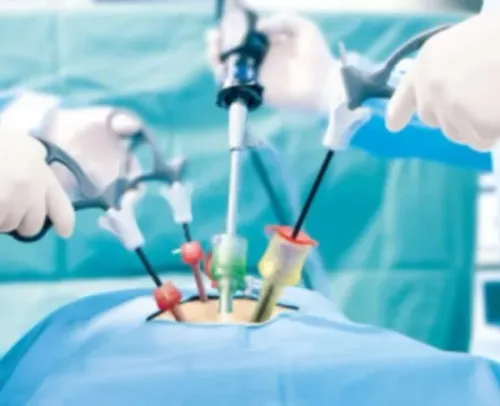
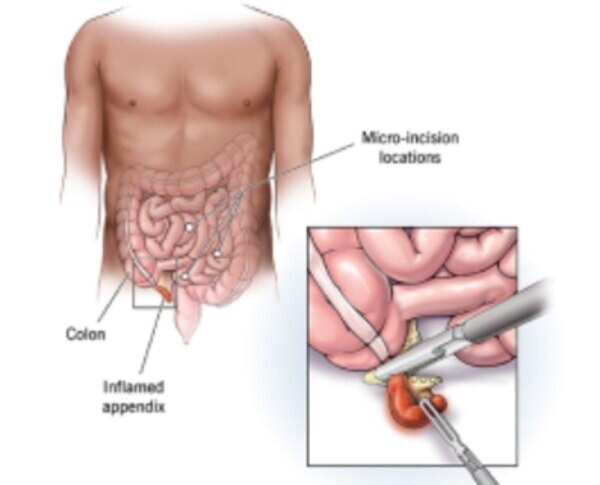
General anaesthesia means you will be unconscious, with a breathing tube and continuous monitoring of oxygen, blood pressure and heart rhythm. The surgeon usually makes three small abdominal incisions: one for a camera and two for instruments. Carbon dioxide gently inflates the abdomen so the appendix and surrounding organs are visible.
During the operation, the team will:
- Inspect the appendix and nearby bowel for inflammation, perforation, an abscess or another cause of pain.
- Seal and divide the blood supply and base of the appendix.
- Remove the appendix through a small incision, using a retrieval pouch when contamination is a concern.
- Wash or suction infected fluid when perforation has caused contamination.
The removed appendix goes to a pathology laboratory for histopathology. The report confirms appendicitis and can identify unexpected conditions, including a tumour.
Laparoscopic appendix removal in Thane can still require a larger incision. Conversion to open appendectomy is a safety decision, not surgical failure. Surgeons may convert when adhesions or swelling obscure anatomy, bleeding cannot be controlled, bowel injury is suspected, or perforation and infection make keyhole dissection unsafe.
Ask whether the hospital has 24-hour anaesthesia, blood-bank access, pathology and postoperative monitoring.
How perforation, gangrene, an abscess or a normal appendix affects recovery
A perforated or gangrenous appendix usually means longer antibiotic treatment than uncomplicated appendicitis, with hospital observation for fever, rising pain, vomiting, bowel inactivity or sepsis. The exact plan depends on source control and your clinical progress.
- Perforation: Expect intravenous antibiotics, blood tests and monitoring for an intra-abdominal abscess. A drain is not automatic; the surgeon places one only when contamination or a collection makes it useful. Follow-up checks wound healing, bowel function and recurrent fever.
- Gangrene: Antibiotics continue when tissue death or contamination is found. Recovery may take longer, even after complete laparoscopic removal.
- Abscess: A walled-off collection may require drainage, antibiotics and a longer observation period. Ask whether imaging or later review is needed; interval appendectomy is not routine for every adult.
- Normal appendix: Antibiotics are usually stopped unless another infection requires them. The specimen still goes to pathology, and follow-up addresses another cause of pain.
These distinctions matter when comparing appendix surgery options in Thane and laparoscopic appendectomy suitability in Thane.
Frequently asked questions
How do doctors confirm appendicitis before choosing treatment?
Doctors combine the pain pattern and examination findings with a blood count, C-reactive protein, urine test and pregnancy test when relevant. Ultrasound or CT can clarify the diagnosis and show perforation, gangrene or an abscess.
Which treatment matches uncomplicated appendicitis, perforation or an abscess?
Uncomplicated appendicitis is commonly treated with laparoscopic appendectomy, while selected patients may receive antibiotics after medical assessment. Perforation or gangrene often requires urgent surgery and antibiotics. A contained abscess may need antibiotics and drainage before interval appendectomy is considered.
How do pregnancy, age and obesity affect laparoscopic appendectomy suitability?
Pregnancy requires obstetric coordination, ultrasound-first imaging and anaesthesia planning that protects the mother and fetus. Children, older adults and people with obesity or heart, lung, kidney or bleeding conditions need adjustments to imaging, positioning, medication and monitoring.
When is conversion from laparoscopic to open surgery needed?
The surgeon may convert when severe inflammation, perforation, dense adhesions, uncontrolled bleeding or unclear anatomy prevents safe laparoscopic dissection. Conversion prioritises safe removal and control of infection over keeping the operation minimally invasive.
Keywords